Elliniko
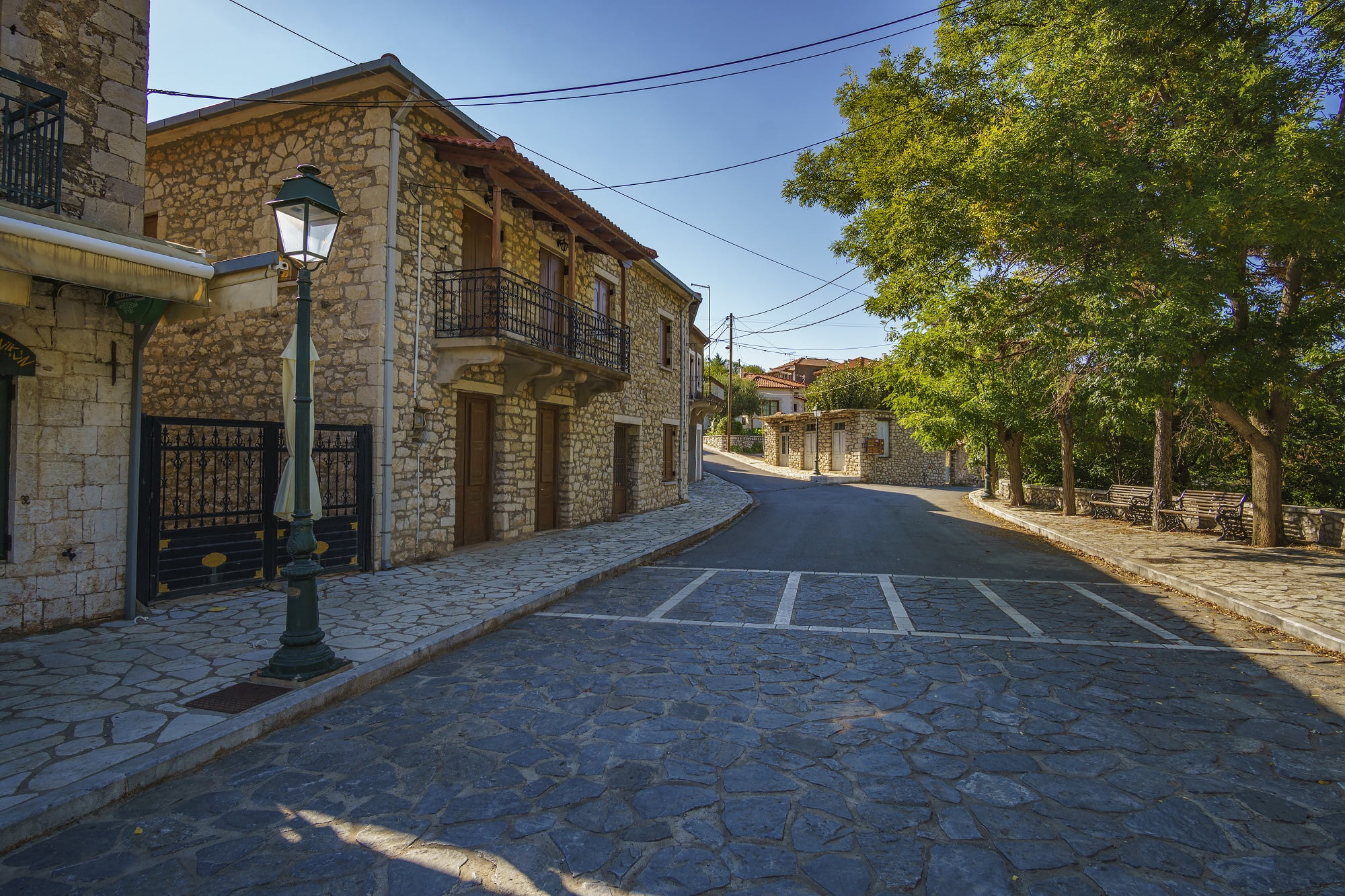
A beautiful village between Stemnitsa and Karytaina, Elliniko is an ideal base for those looking to engage in extreme sports on the Lousios River—weather permitting, of course, and not during the harshest winter months.
Located south of Stemnitsa, the village is built on three small hills at an altitude of 700 meters. The history of Elliniko dates back to the 15th century, specifically to 1515, when it appears in Ottoman Empire census records as a fief of Ahmet Bey, with a population consisting of 41 families, 5 bachelors, and 1 widow. Further references to the village appear in similar archives, along with the first written mention by a traveler, the Venetian Antonio Rafiq (Riet’ Antonio Rakifiko), who described it in 1690 during his journey through the Peloponnese.
He referred to it as Moulatsi, which was the village’s original name. In the Venetian census conducted by Grimani in 1700, Moulatsi is recorded as having 148 inhabitants. By 1849, the population had risen to 347, and by 1907, it reached 807—the highest population in the village’s history. After 1907, the population gradually declined over the years. The village’s name was officially changed from “Moulatsi” to “Ellinikon” on August 20, 1927, based on a well-known local toponym located just north of the village. The name change was published in the Government Gazette (FEK 179/1927).
During the Greek War of Independence in 1821, many fighters hailed from Elliniko, including chieftain Savvas Nikolopoulos, and soldiers Pavlos Lagodimos, Vasilis Barbalias, Diamantis Papavasilopoulos, and Konstantinos Taloumis.
The village also paid a heavy toll in both World War I and World War II, with significant losses among its residents.